
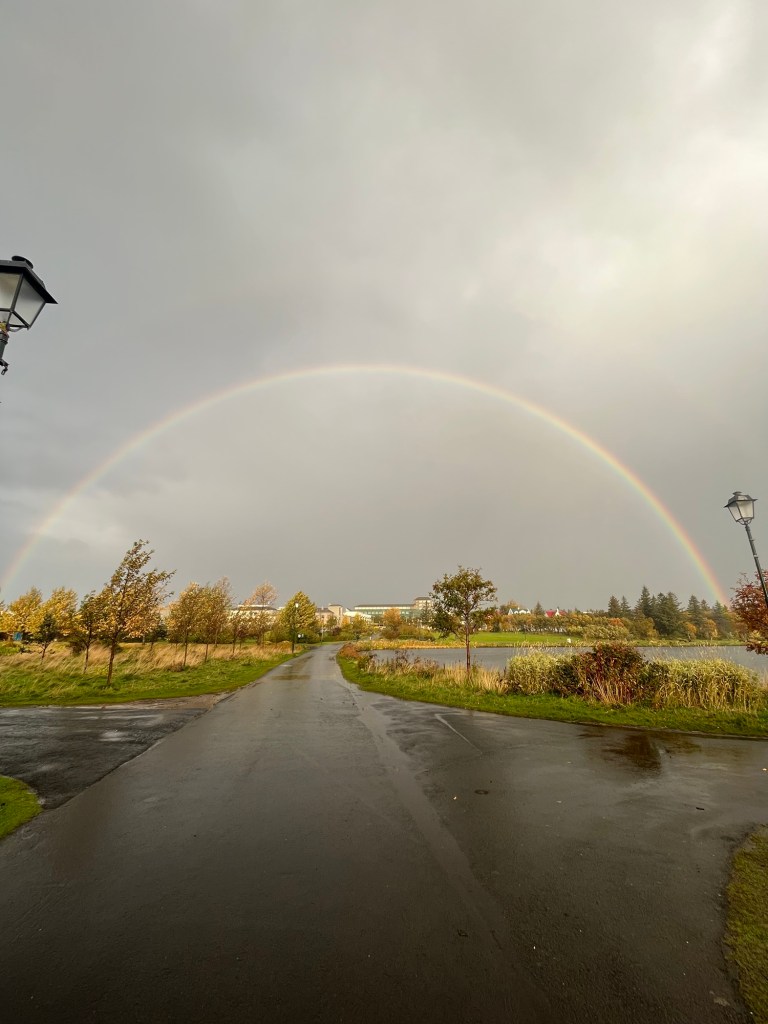
Well, I’ve finally found time with the Midterm break, “Study Week” to give another update. It’s been getting cold and very rainy, but the rainbows here are incredible.
Me and my classmates have been busy every day learning Old Icelandic and working on our academic skills. A weekly habit has formed with me, my partner and out cohort.
I try to arrive at Háskóli íslands every day between 8:30-9am, I join my friends for coffee in the school cafeteria and on Mondays, Wednesdays and Fridays, we cram for Old Icelandic before 1pm or 11am. This class is our heaviest workload and every class begins with a quiz on the paradigms, which gives us the base to work from until we start translating texts.

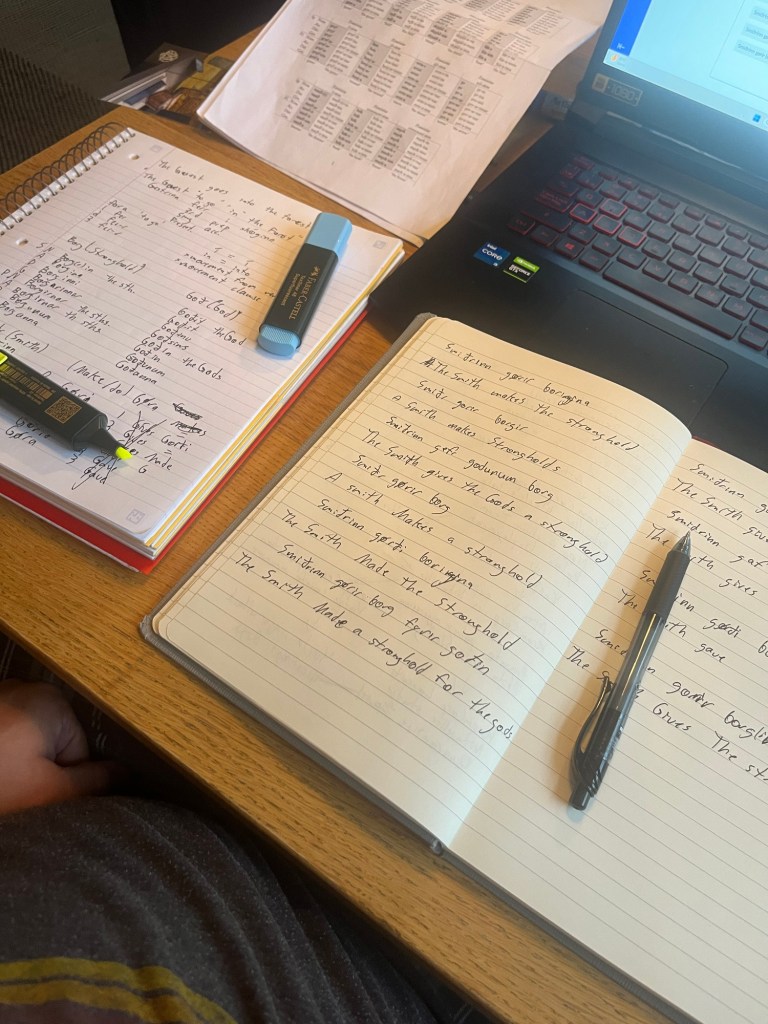
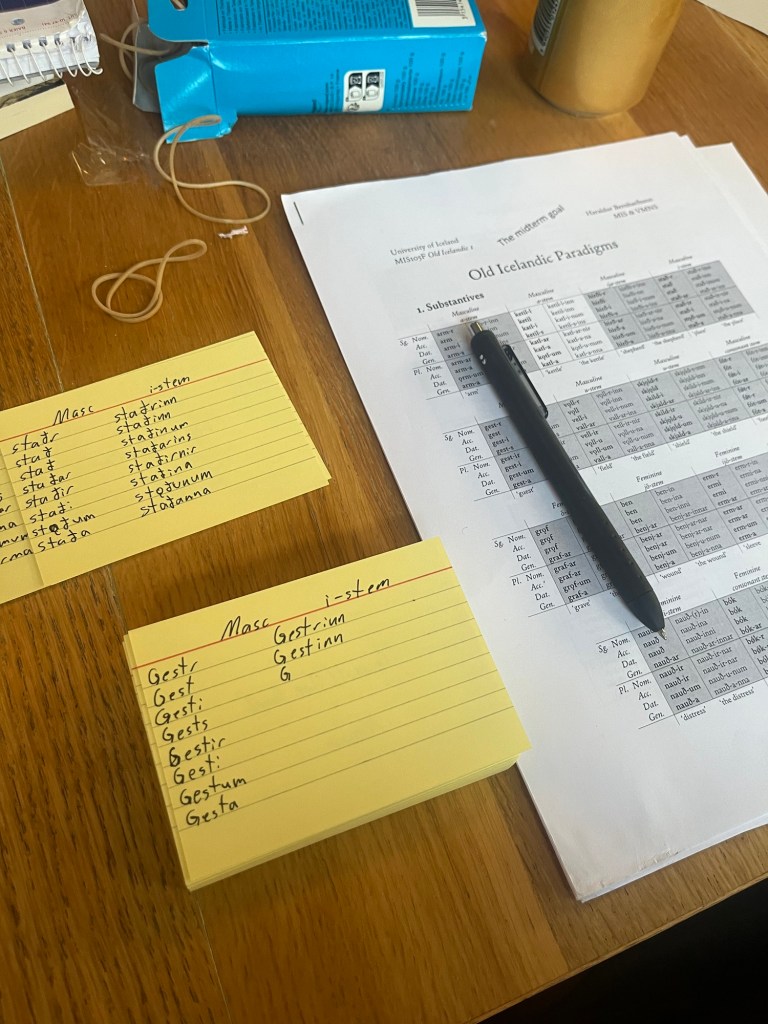
Tuesdays and Thursdays start early with our Old Icelandic Literature class, where we’ve worked through the immense corpus of the sagas, poetry, prose and history of the written language. On Tuesdays, we have our Northern World History, which is primarily a discussion seminar where we read a book a week roughly. This class has finally got me back into a good reading habit because I HAVE TO.
On Wednesdays, I have our Viking Age history class, which is a general history class on the period. I can only hope I don’t annoy my classmates with my incessant answers and questions on material culture and archaeology.
Every Sunday, me, my partner and some of our closest friends have a “Family Dinner” where one of us cooks at one of our apartments for the group or a general shared meal. It’s been the highlight of every week to ensure we keep our mental health in check, which has led to some of the strongest community ties I think I’ve ever had. I cannot imagine my life without these fools.
We are also regularly invited to various lectures, talks and coffee-hours hosted by our program. This can range from “The Political Philosophy of Snorri Sturluson” to the research of our professors and PHDs.
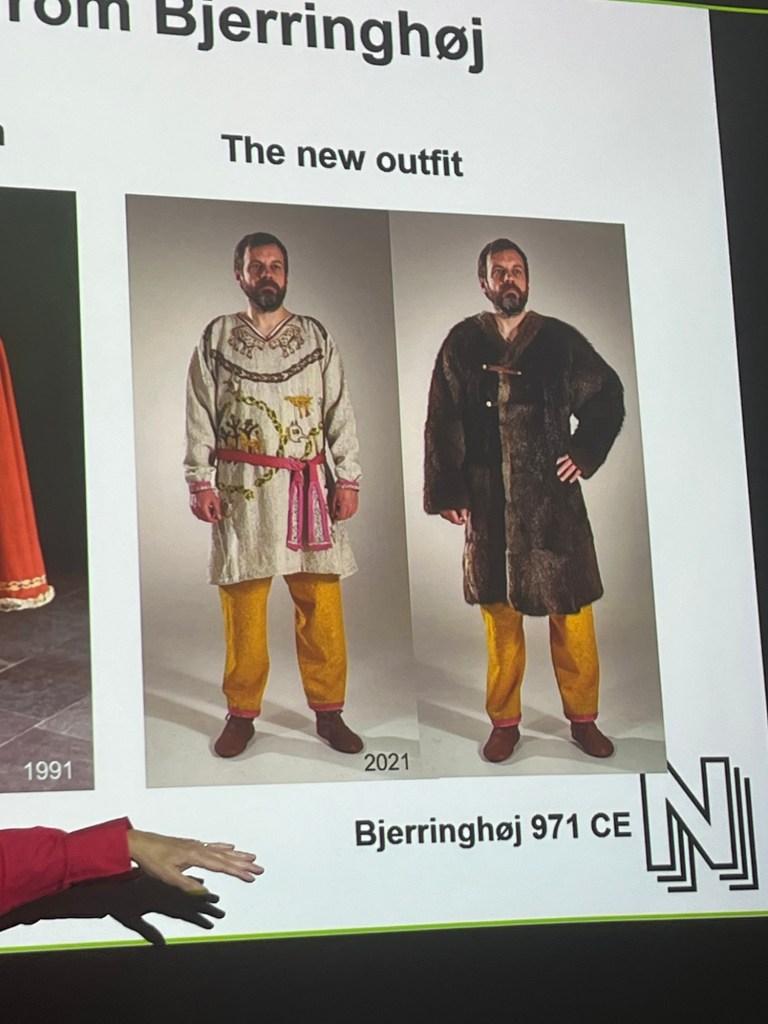
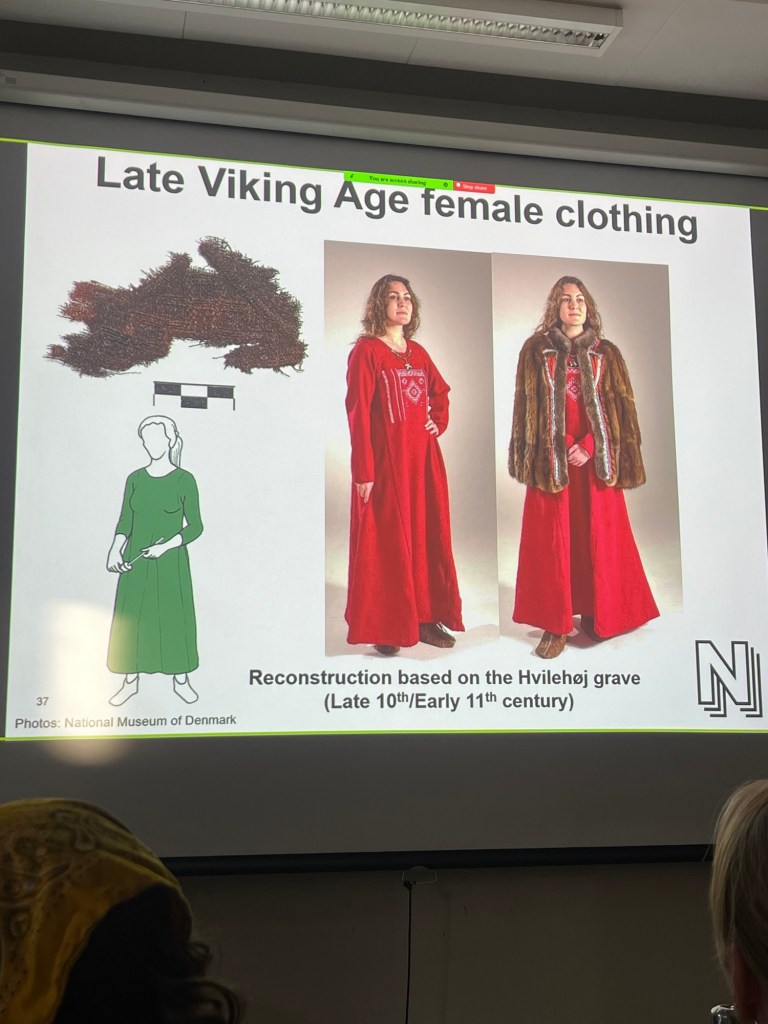
The biggest highlight, especially for the Reenactment side of things, was a lecture on the textile archaeology of Denmark from the Neolithic to the Viking Age by Professor Ulla Mannering from the National Museum of Denmark.
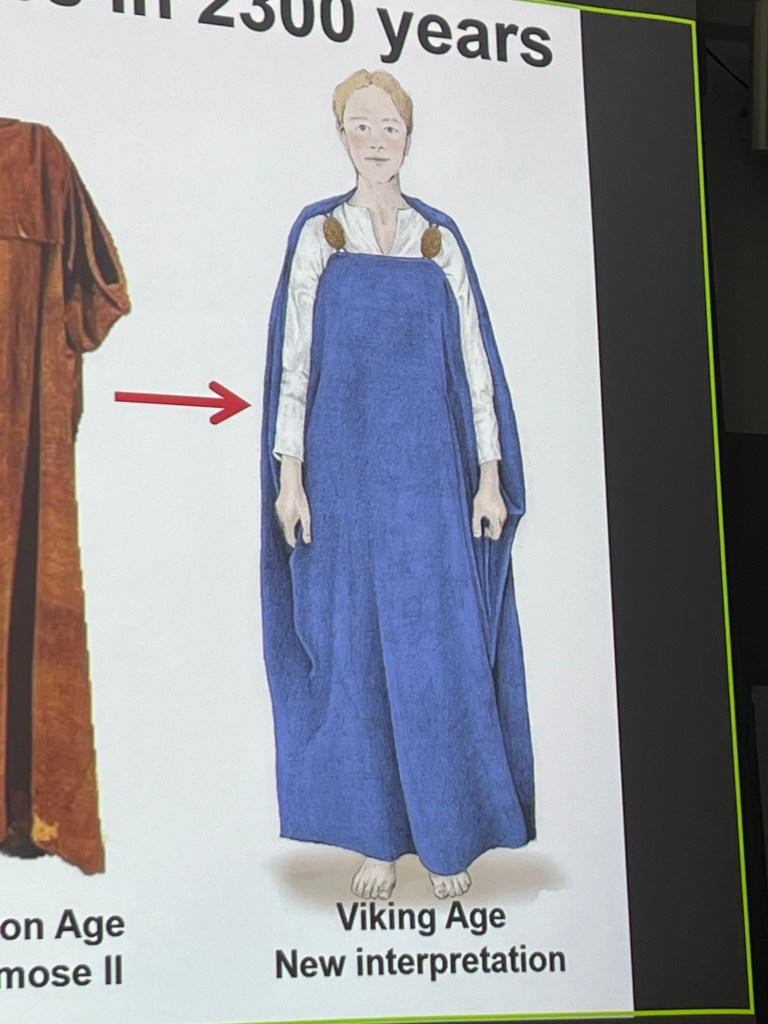
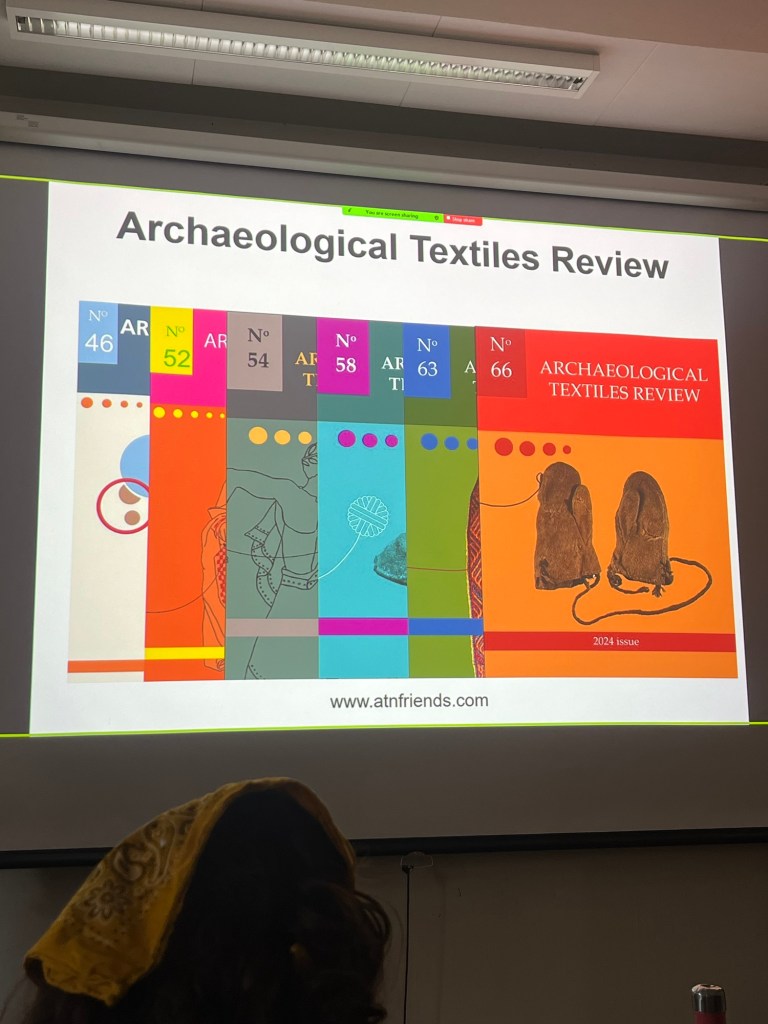
Here are some of the most important images I took from the lecture.

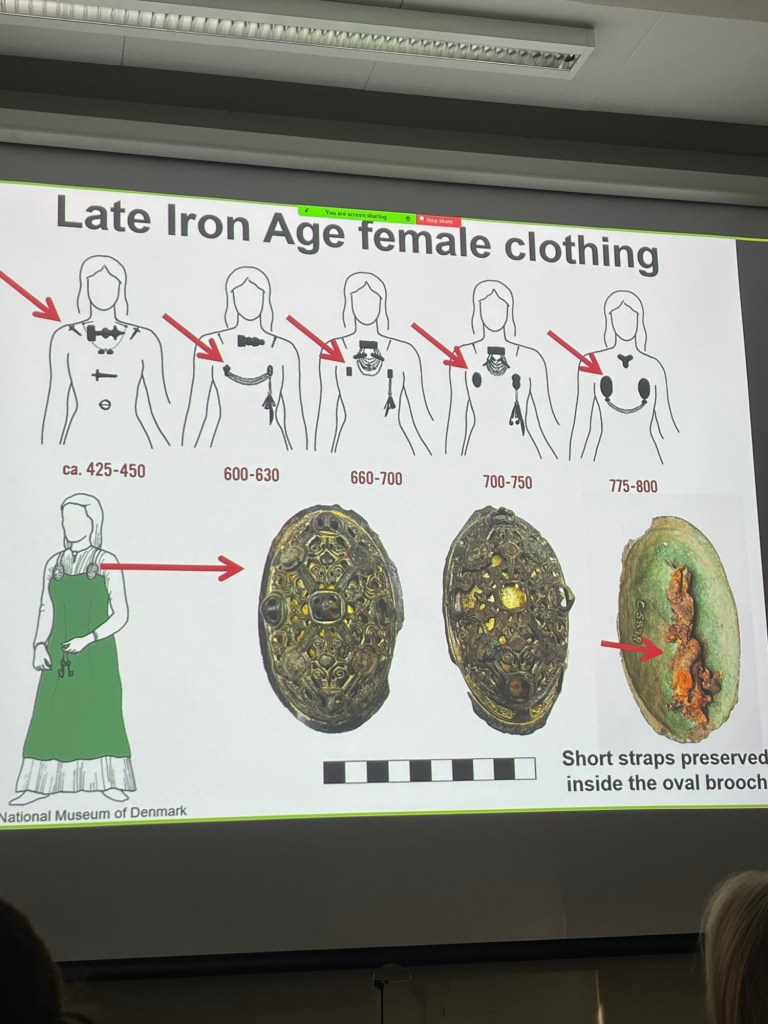


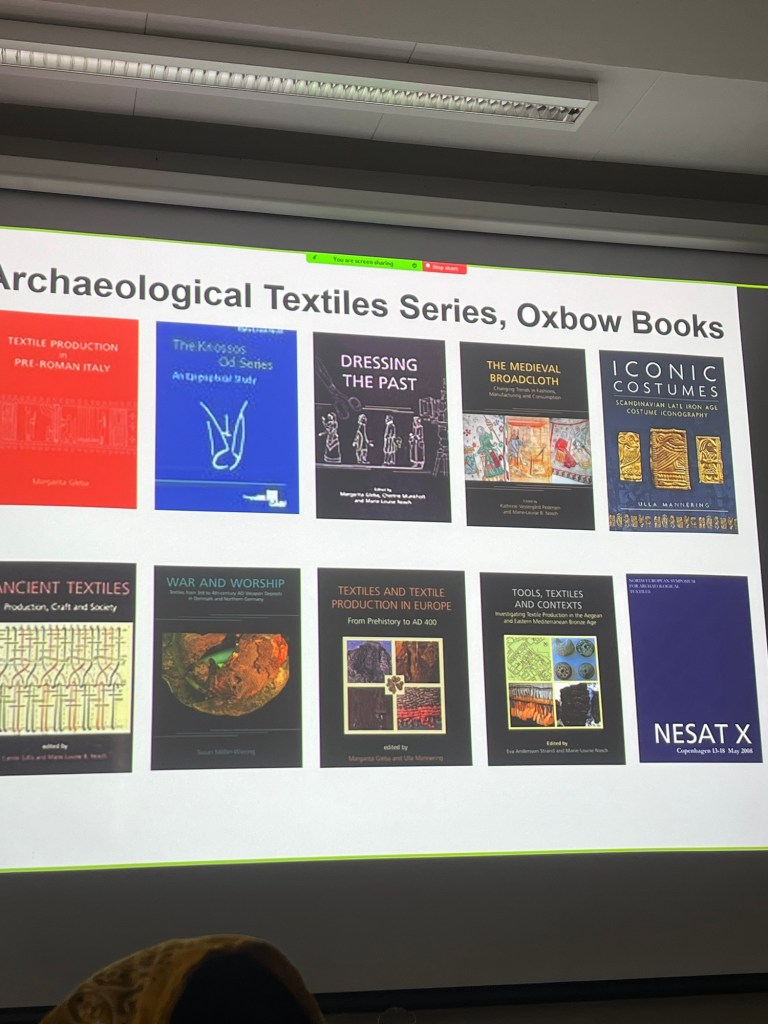
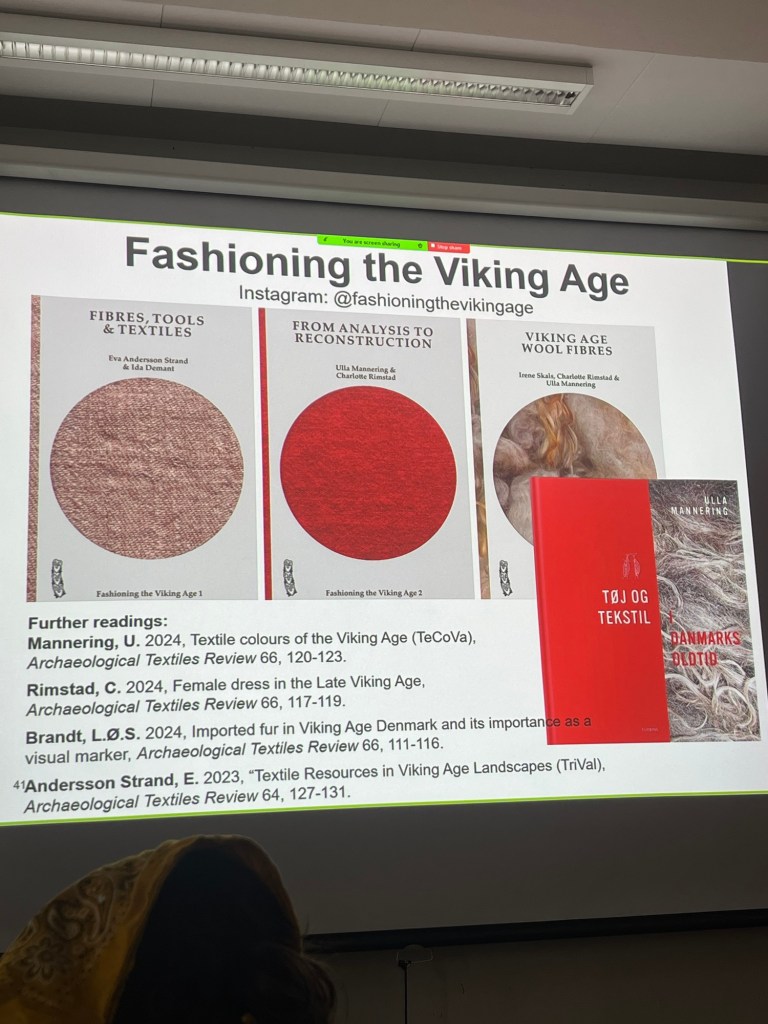
The biggest takeaways for me were;
- Clothing shape does not change much even across centuries unless their is a foreign influence, shape being the last thing to change. Which leads to the following;
- Trousers were less prevalent that hosen or leg-wraps with braies for Viking Men, as the Torsberg trousers are likely from Roman influence and the Baggy pants were likely from Eastern Influence. This would mean that “most” people were not wearing them.
- On the other hand, as women’s dresses had been made form large wraps of fabric for millennia, the traditional “Apron” dress or “Smokkr” was likely more in the Peplos-style of nearby regions. There is also little evidence of long straps from the back over the shoulder. This is actually quite a huge deal for reenactors, but it also means dresses are easier to make. You just need a big sheet of wool, add loops at the appropriate spots with your brooches and you have a larger, more flowy, garment that you can wrap yourself in more.
 ZFSigurdson